
On this page
- What Is an ADU, and What Types Are Allowed?
- How Big Can an ADU Be in Massachusetts?
- What Can Towns Still Regulate?
- North Shore Town-by-Town Snapshot
- What Does an ADU Cost to Build on the North Shore?
- How Do I Finance an ADU in Massachusetts?
- Salem’s ADU Property Tax Exemption
- Does an ADU Affect My Property Taxes?
- Does an ADU Affect My Septic System?
- What Is the Permitting Process for an ADU?
- Can I Rent My ADU?
- How Does an ADU Affect My Homeowner’s Insurance?
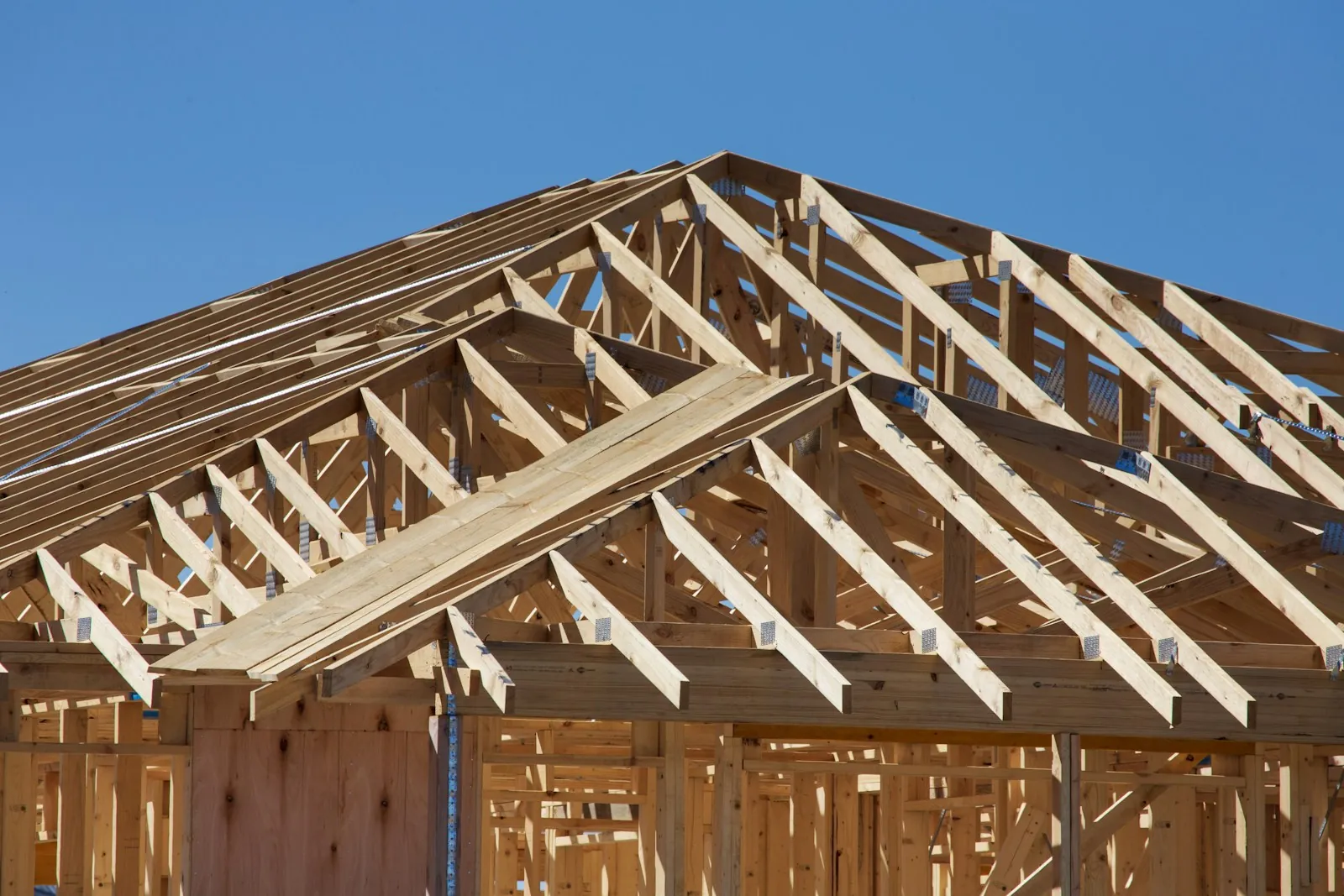
Massachusetts law now allows one accessory dwelling unit — a self-contained apartment on your existing lot — up to 900 square feet by right on any single-family property statewide. The rule took effect February 2, 2025, under the Affordable Homes Act (Chapter 150 of the Acts of 2024). No special permit is required for that first unit. Towns can regulate setbacks, parking, and design, but they cannot ban ADUs outright or require you to live on the property. Every North Shore town from Beverly to Peabody is covered.
What Is an ADU, and What Types Are Allowed?
An ADU is a self-contained residential unit on the same lot as a primary single-family home, with its own entrance, kitchen, bathroom, and sleeping area. The state law allows three forms: an interior conversion (basement apartment, attic unit, above-garage space), an attached addition, or a fully detached backyard cottage. Towns cannot require one form over another — all three are protected.
Common names you will hear on the North Shore include in-law apartment, granny flat, accessory apartment, and carriage house unit. They all refer to the same legal category under M.G.L. c. 40A, § 3 as amended by the Affordable Homes Act.
How Big Can an ADU Be in Massachusetts?
The state caps a by-right ADU at 900 square feet of gross floor area or 50% of the principal dwelling’s gross floor area, whichever is smaller. On a 1,400-square-foot Cape Cod in Beverly, that means your ADU is limited to 700 square feet — not 900. The 50% rule bites first on smaller homes, which are common across the North Shore.
Towns may allow larger units by special permit if they choose. Beverly’s 2023 ordinance allowed up to 1,000 square feet or half the house — the state’s 900-square-foot cap now governs the by-right path, but Beverly may still permit larger units through a separate local process. Always confirm the current local bylaw with the building department before finalizing plans.
What Can Towns Still Regulate?
The state law draws a clear line. Here is what towns can and cannot do under 760 CMR 71.00:
| Towns CAN regulate | Towns CANNOT do |
|---|---|
| Setbacks, height limits, lot coverage | Ban ADUs outright |
| Design standards (must match single-family standards) | Require a special permit for one by-right ADU |
| Site plan review (must be objective, not discretionary) | Require owner-occupancy of either unit |
| Short-term rental restrictions | Impose a minimum lot size |
| One additional parking space (if >½ mile from transit) | Cap the ADU below 900 sq ft |
| Special permit for a second ADU on the same lot | Restrict who can live in the ADU |
The parking rule has a transit carve-out that matters on the North Shore: if your property is within half a mile of a commuter rail station or bus stop, the town cannot require any additional parking at all. Beverly Farms station on the Rockport/Gloucester Line is active; properties within a half-mile radius there qualify. Salem’s downtown stations on the Newburyport/Rockport Line cover a wide swath of the city. In Marblehead, most of the town falls within half a mile of a bus stop, meaning most Marblehead ADUs cannot be required to include parking.
North Shore Town-by-Town Snapshot
The state floor is the same everywhere, but local supplementary bylaws vary. Check with each town’s building or planning department before committing to a design.
Beverly. Beverly’s 2023 ordinance allowed ADUs up to 1,000 sq ft or half the house. A joint City Council and Planning Board public hearing was held in May 2026 to bring Beverly’s ordinance into full alignment with the Affordable Homes Act; confirm final adoption status with Beverly’s Building Department before designing, as the updated ordinance may not yet be formally enacted. Beverly’s setback and lot-coverage rules still apply and can constrain placement on smaller lots. Salem, Beverly, and Andover are on the Specialized Energy Code tier as of DOER’s June 2026 list — ADU plans must meet that standard.
[VERIFY: Confirm Beverly’s updated ADU ordinance was formally adopted after the May 2026 joint public hearing, and confirm current setback and lot-coverage rules, with Beverly’s Building Department before publishing.]
Salem. Salem is a statewide best-practice example. ADUs are allowed by right in the RC, R1, R2, R3, and NRCC zoning districts. No additional parking is required. Short-term rentals are prohibited. Detached ADUs must be at least 10 feet from the main house and cannot be built in the front yard. Salem also has a unique property tax incentive (see below). The Salem City Council updated its ADU ordinance in 2025 to align with the Affordable Homes Act, removing owner-occupancy requirements and clarifying utility rules — utilities for the ADU and primary home must be on a single service.
Marblehead. Marblehead updated its ADU bylaw at the May 2026 Annual Town Meeting (Article 5), passing on the required two-thirds vote. The update brings Marblehead’s rules into line with state law: qualifying ADUs are now a by-right use, and the Planning Board conducts site plan review but cannot deny a compliant application. The 900-square-foot cap applies. Because most of Marblehead falls within half a mile of a bus stop, most ADUs in town cannot be required to include parking. As of September 2026, local reporting described ongoing uncertainty about how the new rules apply to specific applications — particularly where an ADU is by right but the proposed structure triggers other zoning nonconformities. Check with the Marblehead Planning Department before designing.
Danvers. Danvers refers to ADUs as “Extended Family Living Areas” (EFLAs) in its local zoning code. State law overrides the conflicting local provisions — ADUs up to 900 sq ft are allowed by right regardless of the EFLA bylaw’s status. Danvers was in a transitional period actively working to update its bylaws as of early 2026; confirm the current permitting pathway with the Danvers Planning Department before design.
Peabody. The Peabody City Council adopted an updated ADU ordinance on July 9, 2026, bringing local rules into alignment with state law. The older Family Accessory Living Area rules (owner-occupied, 700 sq ft maximum) are superseded. Contact Peabody’s Building Department to confirm the current permitting pathway under the July 2026 ordinance.
What Does an ADU Cost to Build on the North Shore?
By-right on paper is still six figures in practice. Massachusetts ADU construction runs roughly $150 to $400 per square foot in 2026, with Greater Boston and the North Shore toward the higher end of that range. Here are planning-level estimates:
| ADU Type | Typical 2026 Cost (North Shore) |
|---|---|
| Basement or interior conversion | $120,000 – $250,000 |
| Garage conversion | $150,000 – $300,000 |
| Attached addition | $200,000 – $350,000 |
| Detached backyard cottage | $280,000 – $500,000 |
These are planning figures, not quotes. Site conditions — ledge, septic capacity, utility hookups — move the numbers significantly. A detached ADU on a tight Marblehead lot with ledge will cost more than the same footprint on a flat Peabody lot with town sewer. Get at least three contractor bids after your plans are drawn.
Permit fees in Massachusetts typically run $10 to $15 per $1,000 of construction value, so a $250,000 ADU carries roughly $2,500 to $3,750 in permit costs alone, before any site plan review fees your town charges.
How Do I Finance an ADU in Massachusetts?
MassHousing launched a dedicated ADU construction loan program in March 2026. The program offers up to $250,000 for a detached ADU and up to $150,000 for an attached ADU, structured as a blended fixed-rate amortizing second mortgage paired with a matching 0%-interest deferred loan — a structure that lowers the effective interest rate significantly compared to a standard HELOC. Eligibility is capped at 135% of area median income. You must have your designs and permits in hand before applying — this is a build-it loan, not a planning loan. The subject property must be your primary residence. Confirm current terms and participating lenders at masshousing.com before counting on specific figures.
If your household income is above the MassHousing ceiling, a home equity line of credit (HELOC), cash-out refinance, or traditional construction loan are the typical alternatives. Talk to a lender before you finalize your budget.
The Massachusetts Housing Partnership (MHP) also launched an ADU Incentive Program in 2026 that subsidizes professional feasibility studies, capping a homeowner’s out-of-pocket cost at $500 for that initial study.
Salem’s ADU Property Tax Exemption
Salem has a unique local incentive worth knowing about. If you rent your ADU at or below 70% of HUD Fair Market Rent for Salem, you can apply annually to the Salem Assessors Office to exempt the value of the ADU from your property tax bill. Current qualifying rent ceilings (FY2026, per the Salem Assessors FAQ at salemma.gov/m/faq): studio, $1,651.30/month including utilities; one-bedroom, $1,733.20; two-bedroom, $2,058.70. Applications must be submitted annually no later than September 1. The owner must live on the property — either in the main house or in the ADU.
Salem’s residential tax rate is $10.78 per $1,000 of assessed value (FY2026, Massachusetts Division of Local Services). On a $200,000 ADU assessment, that exemption could save roughly $2,156 per year. It is one of the most tangible local ADU incentives on the North Shore.
Does an ADU Affect My Property Taxes?
Adding a legal ADU will generally increase your assessed value, which means a higher tax bill — unless you qualify for an exemption like Salem’s. The increase depends on what the ADU adds to your home’s market value. In a market where Beverly’s median single-family sale price is $805,500 (up 6.6% year over year as of October 2026, per Sherwood & Company market data via Lofty/MLS) and Marblehead’s is $1,125,000 (up 15.1%), a well-built ADU can add meaningful equity even after accounting for the higher tax bill.
Beverly’s FY2026 residential rate is $10.81 per $1,000; Danvers is $10.65; Peabody is $9.47; Marblehead is $8.56 (Massachusetts Division of Local Services, certified rates, verified 2026-07-31). A $150,000 increase in assessed value adds roughly $1,622 per year to a Beverly tax bill at current rates.
For more on how property taxes work on the North Shore, see the North Shore Property Tax Center and individual town pages like Beverly Property Taxes and Salem Property Taxes.
Does an ADU Affect My Septic System?
Yes — and this is often the constraint that stops a project. Adding a second dwelling unit is a change in use under Title 5 (310 CMR 15.000), the state’s septic code. Your existing system must be sized to handle the additional bedrooms. If it is not, you will need to upgrade or replace it before the building department will issue a certificate of occupancy. On the North Shore, many older properties — particularly in Marblehead, Beverly Farms, and parts of Danvers — are on private septic. Get a Title 5 inspection and a septic engineer’s assessment early in your planning process. See Title V Inspection for more on how that process works.
Properties on town sewer (most of Salem, much of Peabody and Beverly) still need to confirm that the existing service line and meter are adequate for two units. Salem’s ordinance requires utilities for the ADU and primary home to be on a single service — confirm your town’s requirements before design.
What Is the Permitting Process for an ADU?
Here is the typical sequence for a by-right ADU on the North Shore:
- Confirm zoning. Call or visit your town’s building or planning department. Confirm the current local bylaw, setback requirements, lot coverage limits, and any site plan review process.
- Hire a designer or architect. Plans must meet the Massachusetts State Building Code (780 CMR) and, where applicable, the Stretch or Specialized Energy Code.
- Septic or sewer review. If on private septic, get an engineer’s assessment. If on town sewer, confirm capacity with the water/sewer department.
- Apply for a building permit. Submit plans, plot plan, and any required site plan review materials. For a by-right ADU, the planning board must approve or approve with conditions — it cannot deny.
- Construction. Typical timeline is 6 to 12 months from permit to certificate of occupancy, depending on project scope and contractor availability.
- Final inspection and certificate of occupancy. Required before the unit can be legally occupied or rented.
If your property is in a local historic district — Salem has four, Marblehead has the Old and Historic District — additional design review may apply. The state’s ADU regulations allow municipalities to impose more restrictive design standards for ADUs in historic districts.
Can I Rent My ADU?
Yes — and you do not have to live on the property to do so. The state law prohibits towns from requiring owner-occupancy of either the ADU or the main house. You can rent both.
Short-term rentals (under 31 days, think Airbnb) are a different story. Towns may restrict or prohibit short-term rental of an ADU. Salem prohibits short-term rentals in ADUs outright. Marblehead’s updated bylaw uses a 31-day threshold. Check your town’s current ordinance before listing.
For a long-term rental, the ADU must meet all state sanitary code requirements (105 CMR 410.000) and be registered with your town if local rental registration is required. Beverly and Salem both have rental registration programs.
How Does an ADU Affect My Homeowner’s Insurance?
Adding a rental unit changes your risk profile. Your standard homeowner’s policy may not cover a tenant’s belongings or liability arising from a rental. Contact your insurer before construction begins and ask specifically about landlord coverage or a dwelling fire policy for the ADU. See Home Owners Insurance for a plain-English overview of what standard policies cover and where gaps appear.
Last verified: November 4, 2026. Beverly’s updated ADU ordinance carries a [VERIFY] flag — confirm final adoption with Beverly’s Building Department before publishing. Danvers and Peabody bylaws have been updated (Peabody July 9, 2026); confirm current permitting pathways with each town’s building or planning department before designing. Salem ADU tax exemption FY2026 rent thresholds ($1,651.30/$1,733.20/$2,058.70) are confirmed by salemma.gov/m/faq.
FAQ
Do I need a special permit to build an ADU in Massachusetts?
No. Under the Affordable Homes Act, effective February 2, 2025, one ADU per single-family lot is allowed by right in every city and town statewide. A standard building permit is all that is required for a qualifying unit. A second ADU on the same lot does require a special permit.
Can my town in Massachusetts ban ADUs or make me get owner approval?
No. The state law (M.G.L. c. 40A, § 3 as amended) explicitly prohibits towns from banning ADUs, requiring a special permit for a by-right unit, or requiring owner-occupancy of either the ADU or the main house. Local zoning provisions that conflict with the state law became unenforceable on February 2, 2025.
How much does it cost to build an ADU on the North Shore in 2026?
Expect $120,000 to $250,000 for a basement or interior conversion, $150,000 to $300,000 for a garage conversion, and $280,000 to $500,000 for a detached backyard cottage in Greater Boston and the North Shore. Site conditions — ledge, septic, utility hookups — can push costs higher. These are planning figures; get contractor bids after your plans are drawn.
Is there a loan program to help pay for an ADU in Massachusetts?
Yes. MassHousing launched a dedicated ADU construction loan in March 2026. It offers up to $250,000 for a detached ADU and up to $150,000 for an attached unit, structured as a blended fixed-rate amortizing second mortgage paired with a matching 0%-interest deferred loan. Eligibility is capped at 135% of area median income, and you must have designs and permits in hand before applying. The Massachusetts Housing Partnership also offers subsidized feasibility studies capping your out-of-pocket cost at $500. Confirm current terms at masshousing.com.
Does Salem have a special ADU tax break?
Yes. Salem homeowners who rent their ADU at or below 70% of HUD Fair Market Rent can apply annually to the Salem Assessors Office to exempt the ADU’s assessed value from their property tax bill. FY2026 qualifying rent ceilings (per salemma.gov/m/faq): studio $1,651.30/month, one-bedroom $1,733.20, two-bedroom $2,058.70 (including utilities). The owner must live on the property. Applications must be filed annually by September 1 with the Assessors Office.
If you are thinking about adding an ADU to your North Shore property and want to understand how it might affect your home’s value or your plans to buy or sell, I am happy to talk through the numbers with you. Reach out through the contact page or find me at /blake.