
On this page
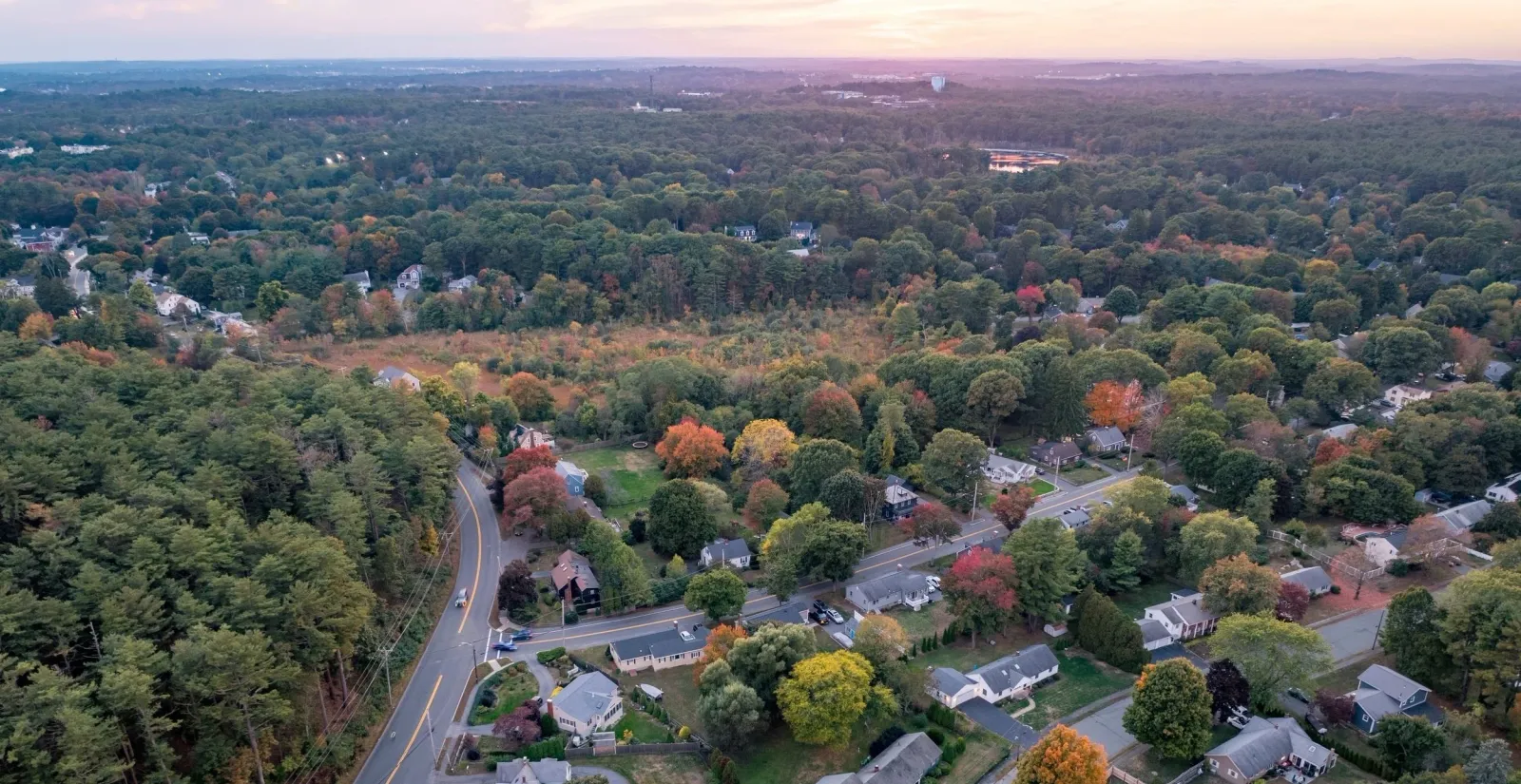
The MBTA Communities Act — formally Section 3A of Massachusetts General Laws Chapter 40A — requires every city and town served by the MBTA to allow multifamily housing by right in at least one zoning district of reasonable size. The law was passed in 2021, upheld by the Massachusetts Supreme Judicial Court in January 2025, and is now actively enforced. For buyers and sellers on the North Shore, it is reshaping what can be built, where, and on what timeline.
What the Law Actually Requires
Each of the 177 affected communities must designate at least one zoning district where multifamily housing — apartments, condominiums, and similar buildings — is permitted without a special permit, variance, or other discretionary approval. The district must allow a minimum density of 15 units per acre, cover at least 50 acres of land, and be located near qualifying MBTA service. The law does not require anyone to build anything. It only requires that the zoning allow it.
Communities are sorted into categories based on the type of MBTA service they receive. Rapid Transit Communities faced the earliest deadlines. Commuter Rail and Adjacent Communities — which include most North Shore towns — had a final deadline of July 14, 2025 to submit a district compliance application to the Executive Office of Housing and Livable Communities (EOHLC). A smaller group of Adjacent Small Towns had until December 31, 2025.
Where North Shore Towns Stand Right Now
As of the date this page was last verified, the compliance picture on the North Shore is largely resolved.
Compliant towns (district compliance certified by EOHLC): Salem, Gloucester, Ipswich, Beverly, Hamilton, Wenham, and Topsfield have all adopted qualifying multifamily zoning districts. The overlay districts are concentrated near transit and town centers: Beverly’s Mandatory Mixed Use overlay runs along Rantoul Street from Bow Street south to Edwards Street, close to the Beverly Depot commuter rail stop. Hamilton’s district is centered near the Hamilton-Wenham commuter rail station. Topsfield was among the first Adjacent Small Towns in the state to pass its required zoning.
Boxford, an Adjacent Small Town with a December 31, 2025 deadline, voted to adopt a compliant multifamily overlay district at its December 17, 2025 Special Town Meeting, 438 to 186. The district is located at The Willows at Boxford. Prior to the vote, EOHLC pre-adoption review indicated the plan would put the town in a good position for compliance. EOHLC district compliance certification status should be confirmed directly with the EOHLC tracker before relying on this for a specific transaction. [VERIFY: Confirm EOHLC has issued a final district compliance certification for Boxford following its December 17, 2025 Special Town Meeting vote — check the EOHLC compliance tracker at mass.gov/info-details/multi-family-zoning-requirement-for-mbta-communities.]
Marblehead was sued by Attorney General Andrea Campbell on January 29, 2026, along with eight other towns statewide, for missing the July 14, 2025 deadline. Marblehead Town Meeting voted on May 4, 2026 to adopt a multifamily overlay district, and the town subsequently achieved interim compliance. Its district compliance application was in review by EOHLC as of the date this page was last verified. [VERIFY: Confirm whether EOHLC has issued a final district compliance determination for Marblehead since its May 4, 2026 Town Meeting vote — check the EOHLC compliance tracker at mass.gov/info-details/multi-family-zoning-requirement-for-mbta-communities.]
Middleton was also named in the January 2026 AG lawsuit. As of the most recent available reporting (May 2026), Middleton had not adopted a compliant zoning plan and was actively litigating — the town submitted affirmative defenses and counterclaims in the AG’s suit, and a separate appeal of a June 2025 Essex County Superior Court ruling is pending in the Massachusetts Appeals Court. Middleton remains non-compliant. Always confirm current status with the EOHLC tracker before publishing or advising clients.
Last verified: 2026-10-11. Compliance status changes frequently. Always check the EOHLC compliance tracker at mass.gov/info-details/multi-family-zoning-requirement-for-mbta-communities for the current status of any specific town.
What Happens to Towns That Don’t Comply
Noncompliant communities lose access to several state funding programs, including MassWorks infrastructure grants, Housing Choice grants, the Local Capital Projects Fund, and MassHousing financing programs. The Attorney General also has authority to bring a civil enforcement action seeking a court order that compels compliance.
In January 2026, AG Campbell sued nine towns — including Marblehead and Middleton on the North Shore — that had missed the July 14, 2025 deadline. Courts have continued to reject legal challenges to the law’s constitutionality. Most recently, on September 18, 2026, the Massachusetts SJC unanimously rejected Marshfield’s claim that the Act is an unfunded mandate, in Marshfield v. Commonwealth of Massachusetts — the second time the state’s highest court has upheld the law. The law is not going away.
What This Means If You Are Buying on the North Shore
For buyers, the MBTA Communities Act matters in a few concrete ways.
New supply is coming. In compliant towns, developers can now file for building permits in the designated multifamily district without going through a discretionary approval process. That means more apartments and condominiums will be built over time near transit stops and town centers. In some markets, this will eventually moderate price pressure. In others, it will add density to neighborhoods that have been single-family for generations.
Check the zoning map before you buy. If you are purchasing a single-family home near a town center or commuter rail stop, ask your agent whether the surrounding parcels fall within the new multifamily overlay district. In Beverly, for example, parcels along Rantoul Street near the Depot are now in the overlay — a buyer purchasing a home one block away should understand what could be built next door. The law does not force anyone to sell or redevelop, but it does change what a neighbor could legally build.
Compliant towns have a funding advantage. Towns that are in compliance can access state infrastructure grants that noncompliant towns cannot. Over time, that difference can show up in road quality, school capital budgets, and municipal services — all of which affect property values.
What This Means If You Are Selling on the North Shore
For sellers, the picture is more nuanced.
Proximity to a new multifamily district is not automatically bad. Research on similar zoning changes in other states is mixed. Well-designed multifamily development near transit tends to support walkability and local retail, which can benefit surrounding single-family values. Poorly designed or oversized projects can have the opposite effect. The outcome depends heavily on what actually gets built, not just what the zoning allows.
Disclosure considerations. Massachusetts follows a caveat emptor tradition — there is no mandatory seller disclosure form. However, material facts that a buyer could not discover through reasonable inspection may still need to be disclosed under Chapter 93A. A significant zoning change affecting a neighboring parcel is the kind of fact a buyer would want to know. Talk to your attorney about your specific situation.
Timing matters. If you are in a town that is still working through compliance — or that is in active litigation — the uncertainty itself can affect buyer confidence. Buyers in those markets may ask more questions about what could be built nearby, and some may factor that uncertainty into their offers.
The Bigger Picture: Why This Law Exists
Massachusetts has one of the most severe housing shortages in the country. Decades of exclusionary single-family zoning near transit have made it difficult to build enough homes to meet demand, which has pushed prices and rents to levels that are unaffordable for many residents. The MBTA Communities Act is the state’s most significant attempt to change that by requiring towns to at least allow multifamily housing near transit, even if they cannot be forced to build it.
The law does not guarantee that new housing will be built. A compliant zoning district is a necessary condition, not a sufficient one. Development still depends on land costs, construction costs, financing, and market demand. But without the zoning change, none of it can happen at all.
For North Shore buyers and sellers, the practical takeaway is this: the zoning landscape is changing, town by town, parcel by parcel. Understanding where your target neighborhood stands — and what the new rules allow nearby — is now a standard part of due diligence.
FAQ
Does the MBTA Communities Act force towns to build apartments?
No. The law only requires towns to zone for multifamily housing by right in at least one district. It does not require any property owner to sell, redevelop, or build anything. Whether new housing actually gets built depends on market conditions, developer interest, and land availability.
Will new multifamily zoning lower my property value?
The research on this question is genuinely mixed and depends heavily on what gets built, where, and how it is designed. Proximity to well-designed transit-oriented development has in many cases supported surrounding property values. The zoning change alone — without actual construction — has not been shown to cause consistent value declines.
Which North Shore towns are currently compliant with the MBTA Communities Act?
As of October 2026, Salem, Gloucester, Ipswich, Beverly, Hamilton, Wenham, and Topsfield have certified compliant zoning districts. Boxford voted to adopt a compliant overlay district in December 2025 and is awaiting EOHLC certification confirmation. Marblehead adopted a plan at its May 2026 Town Meeting and is in interim compliance pending EOHLC review. Middleton remains non-compliant and is actively litigating. Always check the EOHLC compliance tracker at mass.gov for the most current information.
Can a buyer get out of a purchase-and-sale agreement if they discover a new multifamily overlay district nearby?
Generally, no — not automatically. A standard Massachusetts purchase-and-sale agreement does not include a zoning-change contingency. If this is a concern, buyers should conduct zoning due diligence before signing the offer to purchase, and discuss with their attorney whether any contract language can address it. The time to ask questions is before you are under contract, not after.